

Generational Trauma in Immigrant Families: Why You Feel Pressure, Guilt, and Never “Enough”
As a child of immigrants, I often think about the sacrifices and challenges that were made under the guise of the American dream. With hopes of opportunity, safety, and a better life, many immigrants made a difficult, yet hopeful choice, to leave their homes and lay down the foundations for a new life.
But this also came with the heavy weight of starting over: adjusting to somewhere new, navigating a place where they might not have always been welcomed, moving through a society which treated them as “other,” and carrying the weight of old wounds that crossing a border could not get rid of.
Family Patterns That Shape Us
Have you ever met a friend’s parents and had that moment where everything about your friend suddenly makes sense? The way they say certain words, their need to be prepared in every situation, or even the way that they laugh – like puzzle pieces clicking into place.
What is often forgotten is that so much of who you are isn’t just about you – it’s about where you come from. The stories, survival strategies, and the unspoken rules you learn from your families shape you in ways that you may not realize. Its these patterns that you learned from watching your parents.
Maybe you’ve noticed yourself:
- Putting aside your own needs because of the pressure to put your family first
- Struggling to celebrate or enjoy your success because you always feel like you could be doing more
- Feeling the weight of being the bridge between cultures by editing the way you speak, the way you dress, and behave in certain settings to avoid being perceived by others
- Avoiding rest because of an internalized belief that your worth only comes from hard work
- Carrying the guilt of your family’s sacrifices and always pushing yourself to make it all “worth it”
When safety feels fleeting, the body responds. For immigrants and their children, survival mode can often feel natural.
Survival mode may look like trouble sleeping, a constant state of alertness, stomach pains; and, emotionally, like anxiety, low motivation, difficulty relaxing, trouble with experiencing joy.
Children of immigrants often internalize and accept this as their way of existing. There is safety, and, honestly, normalcy in constantly being aware. You carry these fears as your own, alongside the fears of your families – their worries about discrimination, being seen as “other,” and never fully feeling accepted.
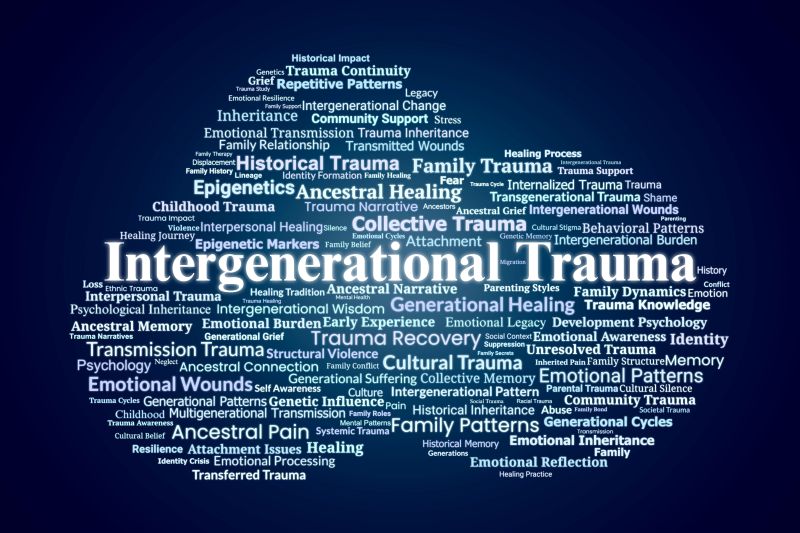
Generational Trauma: Carrying What Came Before Us
These struggles that you face as children of immigrants don’t begin with you. The fears, anxieties, and coping strategies that live within you also live within your parents, your grandparents, so on and so forth, and are deeply rooted in the past.
This is intergenerational trauma. It’s the ways in which unhealed pain, fear, and worries are transmitted from generation to generation. Though some of these survival strategies and lessons may have been rooted in wisdom and resilience, they might also have the effect of leaving you feeling trapped in survival mode; even once the original threat (which may have been long before you were born) no longer exists.
Acknowledging this does NOT mean blaming your family. They did what they had to do to survive.
Evolutionarily, your brain is hard-wired to do one thing: survive. And, so trauma can be effectively passed down as a means of doing so. Generational trauma continues until one generation untangles itself from the past and learns to live beyond surviving.
Untangling these dynamics can feel daunting and confusing, but it’s possible. It is important to challenge what survival might have felt like in the past and explore what life looks like in the present. This might look like asking yourself what does safety mean for you today?
It’s More Than Just Personal
If you zoom out even further, you can see that these struggles are not only personal or familial – they’re systemic. The racism, xenophobia, and policies that target immigrants are more than just headlines and topics to avoid at a dinner party – they shape the environment and world that immigrants and their families grow up in. They are a part of a larger story which tells immigrants, and children of immigrants, that their safety, worth, and belonging is conditional.
Today, many families are living with additional stressors of immigration law enforcement, ICE raids, and changing immigration laws. These stressors are further cementing and reinforcing the fears and anxieties of instability.
For children of immigrants this creates a complicated and conflicting inner world. On one hand, you might feel a huge sense of gratitude for the potential for opportunity and appreciation for the sacrifice your parents made. On the other hand, you may feel angry and frustrated with the ingrained pressures and responsibilities that you did not ask for.
And you experience all of this, living in a society that constantly reminds you that you are different. The complexity of this leaves your nervous system on high alert, your mind always worried, and emotions that are hard to tolerate and regulate.
So, what now? Steps Towards Change
The first step is awareness. Awareness of these patterns takes the power away from them and gives it back to you – it gives you the power to be in control of your life.
It’s important to allow yourself grace in acknowledging that these patterns are understandable and were, at some point, necessary. Once you’ve acknowledged this and met yourself with compassion, you can recognize that healing is about creating safety in the present.
Healing might look like…
- Community: Humans are social beings. Building relationships that are supportive can be incredibly impactful in the healing journey. By surrounding yourself with others who have had similar experiences and can relate to you, you are reminded that you are not alone and can feel understood. And, by sharing your own experiences with others, you can support them.
- Self-Compassion: Though this is something that is much easier said than done, remembering to treat yourself with kindness and compassion is very important. Your words carry weight and the way you speak to yourself matters. This could also look like allowing yourself to slow down and to laugh more and to be freer without feeling like you need to earn the right to rest.
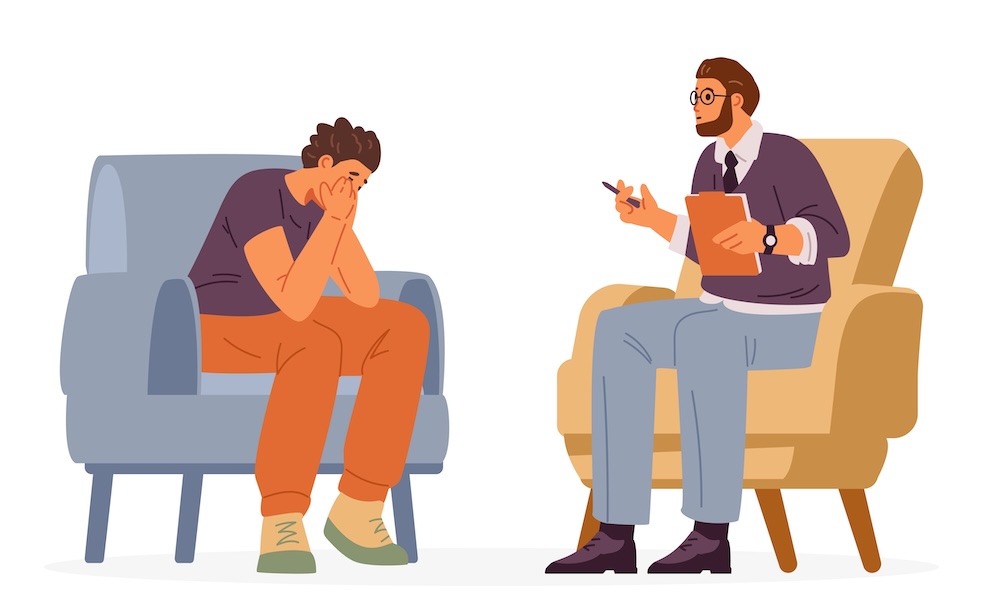
- Therapy: Having a space that is safe and yours to reflect on patterns you’ve noticed about yourself that you don’t understand creates room for curiosity and allows you to make sense of your own story. With this, you can start to make active choices for how you want to respond to situations that align with who you are now, in the present, and not who you had to be to survive.
Healing from generational trauma and survival mode patterns does not mean forgetting where you came from, your families’ stories, or diminishing their sacrifices.
It means acknowledging the weight that you carry, exploring where it came from, understanding how it shapes your life and world view and learning how to move forward in ways that honor the past while also empowering and nurturing your future.
An Ongoing Process
Healing is not linear. Some days you’ll feel more grounded and freer, and others you might find yourself right back in survival mode – and, that is okay.
What’s important is noticing it, naming it, and meeting yourself with compassion instead of judgement.
It takes time to learn how to create your own sense of safety and security in a world that is imperfect, and, at times, unfair and unjust. By acknowledging both the personal and systemic forces that have impacted you, you can find ways to take steps outside of survival mode and into a life where you are able to feel balanced.
Over time, with compassion and support, you’ll learn to live with more ease. You are not alone in carrying this weight, and you don’t have to figure it out on your own. Your experiences, your family’s history, and the external rhetoric is a part of you, but it does not have to define your life.
The journey towards healing is about learning to trust and feel safe again – with yourself, with your relationships, and with your community. Survival mode got you here, but healing will finally let you live.







The section on unspoken guilt hit hardest — especially “your inner drill sergeant acts as a jailer, you overwork and feel bad when you take time off.” That line describes almost every high-earning child of immigrants I know. We’re taught to read our parents’ sacrifice as a debt, and money becomes the place that debt gets collected, whether we notice it or not.
What I’d add from the money side specifically: that guilt doesn’t stay abstract. It shows up as very concrete, very learnable patterns — flinching at spending on yourself, sending money home out of obligation instead of choice, feeling like your own income was never fully yours to begin with. I ended up writing a whole book about it, Immigrant Proud, because I kept seeing the same story: people who’d “made it” financially but still felt like frauds every time they enjoyed what they’d earned.
Thank you for naming this so clearly. Pieces like this are doing real work for people who didn’t have language for what they were carrying.