
Trusting yourself: Why Your Therapist Won’t (and Shouldn’t) Give You Advice

You come to therapy with so many questions and just want someone to tell you what to do. Yet, your therapist just won’t give you the answers.
“Should I break up with them?”
“Do you think I should quit my job?”
“Are my friends right about me?”
Many people have been in this situation before: you ask your therapist a straight-forward question, hoping for a straight-forward answer. Instead, they nod thoughtfully and ask you something like “What do you think?” Great. Somehow, 50 minutes later, they’ve never directly answered your question.
That is understandably annoying and frustrating.
If therapists spend years studying psychology, human behavior, and talking with people day after day, shouldn’t they be able to tell you what to do?
The answer is, yet another annoying question: Who is anybody – including your therapist – to tell YOU what to do with your life?
The truth is that good therapy is often less about giving advice and more about helping you better understand yourself so that you can discover your own answers.
Why Do I Want Advice From My Therapist?
To be completely clear, there is nothing wrong with wanting advice. Everybody wants it, and, frankly, sometimes we need it.
Life is complicated. Relationships are messy. Decisions can feel high-stakes, intense, and like too much to hold alone. And, when you’re feeling anxious, overwhelmed, or stressed it can feel incredibly relieving have someone, anyone, just tell you what to do.
Advice creates a sense of certainty. It helps cut out the noise and maybe even helps you stop second-guessing yourself. In these moments, advice isn’t just helpful or another perspective, it feels like a breath of fresh air. Relief.
Most of the questions you’re bringing to therapy, however, aren’t just about a specific situation. They are questions that beg a deeper and more thoughtful conversation; a conversation that explores the uncertainty and difficulty trusting yourself.
It’s worth it to say that a degree of self-doubt is healthy. Some questioning of yourself helps to keep you reflective, humble, and open to different ideas and perspectives. It encourages you to slow down, think carefully, and consider different possibilities.
The problem isn’t the doubt. It’s when doubt becomes so overwhelming that it becomes paralyzing or depletes your trust in your judgment. Then, advice starts to serve a different purpose. You’re no longer looking for different thoughts and perspectives, now, you’re looking for an answer to uncertainty.
Why Do I Seek Reassurance Instead of Trusting Myself?
When people think about reassurance, they think about being comforted. You just want to feel safe and empowered and validated.
Sometimes you do need a trusted friend to support you, to feel validated by your partner, or to be comforted when you are struggling. Asking for and receiving support is not wrong.
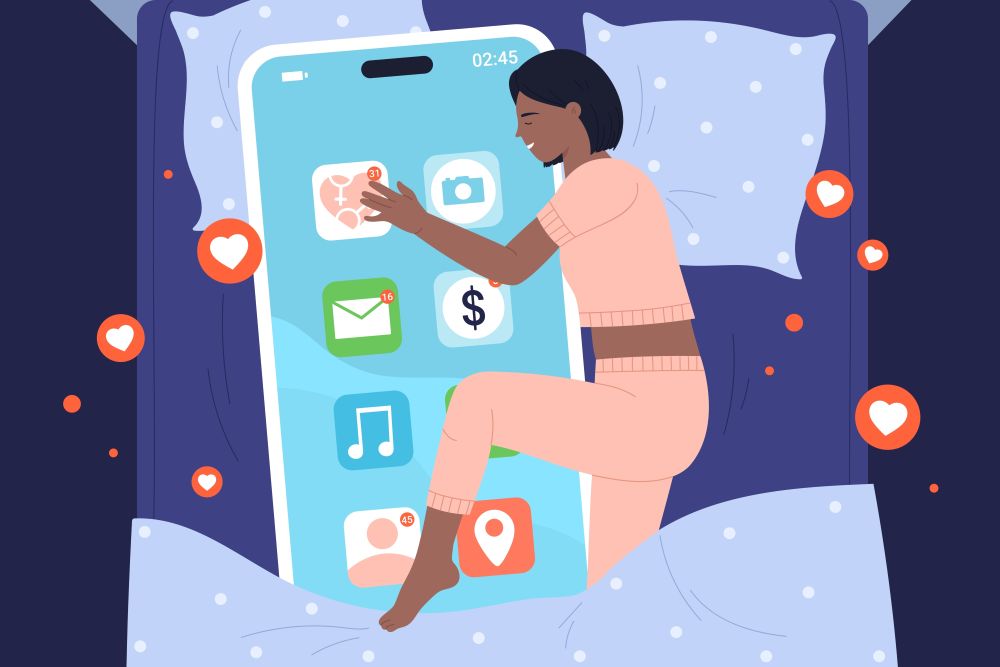
But have you ever found yourself talking through a problem with a friend, feeling better afterward, and then, a few days later feeling the urge to have the same conversation again? Maybe you ask your partner for their opinion. Or, maybe you start doomscrolling through Reddit threads to find answers. Perhaps you even resort to AI.
For a few moments, maybe a day or two, you feel relieved. Certain. And then the cycle starts again.
This cycle can be incredibly frustrating. The less you trust yourself, the more you seek reassurance, and then, the fewer chances you have to discover that you are capable of navigating life on your own.
Over time, reassurance can start to look less like support and more like an addictive need. Reassurance feels good for a second, but it doesn’t necessarily help you trust yourself.
Which raises an important question: Why is it so hard to trust yourself in the first place?
Why is Trusting Myself So Hard?
Trust is learned.
Think about it: trust doesn’t magically appear one day. When you go on a first date, you aren’t quick to share your deepest darkest secrets with them over dinner (or, if you do, it’s not out of trust). But, as you get to know them better, you’ll slowly let them in more. Over time your relationship builds and grows through experience, and so does your trust in them.
Self-trust works the same way.
Let’s back up. As a child, you learn whether your thoughts, feelings and instincts are important through your relationship with the people around you. When your parents, or caregivers, listen to you, take you seriously, and even allow you to make mistakes without shaming you, then you begin to develop trust in yourself.
What happens when this doesn’t happen though? How do you trust yourself if you aren’t validated or supported or respected?
For many trauma survivors, this didn’t happen. Feelings were dismissed. Experiences were criticized. Mistakes felt life-or-death.
Alternatively, you may have grown up in a family dynamic where you were constantly praised, rarely had critical feedback, or were always told how “good” you are. Oddly, this scenario also makes it nearly impossible for you to learn to make mistakes without shame or to trust yourself.
When you’ve spent years learning to question, disrespect, or perfect yourself, it makes sense that making decisions as an adult feels paralyzing. It’s not that you’re incapable of making a good decision. It’s that you’ve had very little opportunities to develop confidence in your ability to do so.
So, Then, What Is My Therapist Doing?
If your therapist isn’t telling you whether you should leave your relationship, quit your job, or make that big decision, it doesn’t mean they’re just sitting there and watching you struggle.
We are asking questions to help you, and ourselves, understand how you make decisions. We want to know –
- What makes decisions feel impossible?
- What about mistakes feels so intense?
- What feels intolerable about disappointing someone?
- Does this uncertainty show up in other parts of your life?
These questions, though difficult to answer and vulnerable, aren’t meant to avoid giving you an answer. They are meant to help you understand yourself better. To help shed a little light and clarity onto what is blocking you from finding security in yourself.
Sometimes the problem isn’t the decision itself. It’s the anxiety around the decision that is so loud and filled with a thousand and one “what ifs” that every option feels wrong. Your past has taught that you making the “wrong” choice isn’t just disappointing – its also dangerous.
A therapist isn’t trying to make the decision for you. They want to help you become someone who can trust yourself to make difficult decisions and tolerate the uncertainty around not knowing what is “right” or “wrong.”
How To Build Self-Trust
Honestly, the most annoying part is that trusting yourself can’t be spoken into existence. It isn’t built by hearing “I believe in you” by all your loved ones or by finding the perfect answer online.
It builds through experience.
You make a decision, live through the outcomes for better or worse, and learn that you can handle whatever happens. Whether it be excitement and happiness or disappointment and hurt. And then you do it again.
Slowly, with each decision and each outcome, you start to build confidence. Confidence doesn’t come from always knowing exactly what the right thing is, it comes from learning that you are able to cope with whatever the outcome is.
Once this confidence and trust begin to build, you’ll find yourself searching less and less for someone to tell you what your life should look like and spend more time learning to listen to yourself.
Admittedly, this process sounds scary and exhausting; but, also, SO worth it and fulfilling and empowering.
Learning to Trust Your Own Voice
So, the next time your therapist answers “what should I do?” with “what do you think” you will probably feel that flicker of frustration. That’s okay. We know it’s annoying.
Someone else’s answer, even a good one, won’t teach you that you can trust your own. It’s one more voice to help you second-guess yourself. Not to mention that the only one who really knows what you need and want is you!
Your therapist isn’t trying to withhold answers from you – they’re betting on you. They want you build your ability to sit with not knowing the perfect answer, making a decision anyways, and finding out that you can handle what comes next.
You won’t be doing it alone. But you will learn that you can do hard things.
Nobody gets to tell you what your life should look like. Not your past, not your best friend, not a stranger online. Only you have that power.








Leave A Comment