

Betrayal Trauma Explained: The Hurt We Can’t Afford to See

Photo by Marek Piwnicki on Unsplash
“Open your eyes”
I blink open my eyes and look around. It’s a warm summer evening. My friends and I sit in a circle, trying to look nonchalant, while covertly stealing glances at each other, full of mistrust and mischief. One brave friend speaks first…and the accusations begin!
I’ve played Mafia, a social deduction game where players are given secret roles and try to figure out who the “Mafia” hiding in the town are, a few times before. It’s literally a game of lying, deceit, and betrayal.
As our numbers whittle down, I think we have it. We’ve discussed long enough, and one of my friends seems to be arguing a little too hard. Although there’s a little fluttering in my stomach, not quite convinced, the clock is running down and we point in 3…2…1…!
And… we lost. The teammates I had absolute faith in were the Mafia, and I was the unsuspecting townsperson who led my team to doom. We all laugh, as it’s all in good fun, but I still feel a little sting in my chest from the betrayal. How did I fall for it? And why did it sting?
The Sting: Listening to Your Gut Instincts
The little sting that I felt after the game? It’s an evolutionary response, ingrained in us to feel pain when we are betrayed.
Pain is a danger signal, warning you to pay attention to your social safety for your continued survival. In this circumstance, pain deters you from being betrayed again and warns you about people who would cause harm.
When the betrayers can be avoided (or you believe they can be), you’re naturally sensitive to picking up slights such as cheating or lying. In Mafia, I can afford to see the betrayal. I laugh, I remember who tricked me, and I play differently next round. The sting does exactly what it’s meant to do.
But what happens when you can’t avoid being hurt; when someone you trust, someone you need, causes that harm?
When you’re dependent upon someone who is hurting you, being aware of the sting might actually be more dangerous for you. In fact, your continued health and well-being may be reliant upon you being un-aware.
The Lighthouse: A Metaphor for Betrayal
Imagine you’re on a ship, sailing home one moonless night from a long voyage. Clouds cover the stars, and the only light you can see is the lighthouse in the distance. You’ve sailed this route for years, and the ship has always relied on the keeper’s light to get back safely.
This night, the keeper’s light guides you towards large rocks. They gouge the hull and the bilge starts taking on water. You make it back safely, but it could’ve been dicey.
Do you stop relying on the lighthouse after its keeper led you to danger? Maybe you have a rough idea where to go, but you also know there are much worse dangers out there than the rocks you’ve scraped.
Can you confront the keeper? Maybe if you do, you’re worried they will stop lighting your way. Or they’ll turn the light off when you need it most, leaving you stranded and lost.
Perhaps instead of doubting the keeper, you start doubting yourself. Did you misread the light? Maybe you steered wrong. The rocks weren’t really that close, were they? Was it even that bad?
It may feel safer to question your own eyes than to question the one person guiding you home.
This example highlights the dynamics at play in betrayal trauma.
Betrayal Trauma Theory
Betrayal trauma theory, developed by Dr. Jennifer Freyd, describes the specific harm caused when a trauma is inflicted by an individual, group, or institution upon which one is dependent. It highlights how interpersonal power dynamics, trust within relationships, and betrayal of trust by the more powerful impact individuals in specific ways.
In the example above, the sailor is dependent on the lighthouse keeper to get home safely. The relationship between the sailor and the keeper is adaptive, helping the ship get safely back to shore. The sailor put her trust in the keeper, but this trust is broken when the ship is steered into the rocks.
A more common example of betrayal trauma may be a child who experiences harm by their caregiver. Children are dependent on their caregivers for food, protection, and care. Kids are programmed to develop healthy, trusting, and affectionate relationships with their caregiver for their survival.
If a child fully recognized that a caregiver was harming them, they might withdraw. But withdrawing from the person who keeps them alive can also be dangerous for their survival. In this case, staying attached is more important than detecting harm.
In Mafia, if I had trusted that fluttering in my stomach, I could have called out my friend and voted them out of the game. A child can’t vote their caregiver out. There’s no next round, no new teams. They’re stuck playing with the person who betrayed them.
Children aren’t the only ones who can experience betrayal trauma. Think of a spouse who relies on their abusive partner financially, or an employee whose visa depends on their exploitative boss. Seeing the betrayal clearly might mean losing your home or family. Sometimes, it isn’t even one person, it can be a whole institution … a church, a school, a hospital, etc.
And sometimes, it’s your own community. Dr. Jennifer Gómez describes cultural betrayal trauma as harm caused by someone within your own marginalized community. When the outside world already feels unsafe, your community becomes your safe place. When harm comes from within, it cuts twice … once from the harm itself, and again from what speaking up might cost.
Whether it’s a caregiver, a partner, an institution, or a community, the brain adapts. Information may be lost, disorganized, or disconnected from the self. You might literally stop seeing what’s happening right in front of you. Freyd calls this “betrayal blindness.”
Betrayal Blindness
Betrayal blindness is when your mind protects you from being aware of information that can threaten your relationship with the person or institution you depend on for survival. This can lead to memory gaps, disorganization of thought, and/or emotional disconnection. It also can leave you struggling to trust others or even your own self.
Sometimes the memory itself is there, but its meaning isn’t. You might be able to describe what happened in a flat, matter-of-fact way, as if it were just the way life is, without the full weight of it ever landing.
There might be a feeling of simultaneously knowing and not knowing. Although part of you knows or can see, another part might feel completely blind to what appears obvious to others.
You might feel shame and guilt, asking “how could I not have known?” Or you feel ashamed that part of you did know but ignored it for so long.
This guilt makes sense! Your survival depended on keeping a caregiver happy. You learned to orient around that person’s needs, sometimes so completely that you end up feeling your caregiver’s pain more than your own. As such, you may even feel responsible for the harm that was done to you.
Like the sailor who starts doubting her own eyes, it may be harder to trust your own mind and intuition. You also may become so used to excusing others that you don’t even realize you do it, perpetuating a cycle of self-doubt.
Other people’s reactions may make the shame and guilt feel worse. This is especially true when the person who caused the harm responds with what Freyd calls DARVO: Deny, Attack, and Reverse Victim and Offender. They deny it happened, attack you for bringing it up, and position themselves as the one who has been wronged, making that guilt and shame feel even more intense.
For example, imagine if, after the game, my friend swore they were never Mafia, called me paranoid for even suspecting them, and then said I was the one who betrayed the team for accusing her! I’d probably start wondering if I was wrong or bad for playing by the rules. I might even fear that I’m crazy. Now imagine that happening with someone you love and depend on.
It’s easy to see how someone could get lost in that confusion. But your mind adapted once to keep you safe … and it can adapt again to help you heal!
Healing from Betrayal Trauma
Now that you know what betrayal trauma is, where do you go from there? How do you heal from this type of harm?
Understand what happened.
As your story is muddled with pieces you may be “blind” to, it is critical to understand the full picture of what happened. This understanding may be painful, as your mind hid this information from you for a reason. But in taking the time to know, understand, and uncover, there can be empowerment.
Develop self-compassion.
Often, those who cause the trauma magnify the shame, guilt, and uncertainty that come with these memories, through responses like DARVO. By understanding the story of what happened, you might begin to see that not knowing was your mind protecting you, not a personal failing. Developing compassion for the you that survived is essential to the healing process.
Find supportive, trustworthy people.
Betrayal tends to isolate, partly through shame and partly because trusting anyone feels risky. Leaning on even one or two safe people, or joining a support group with others who’ve been through something similar, can ease the “I’m the only one” feeling and gradually rebuild your sense that some people can be trusted.
Tell your story.
Being able to tell your story to someone safe can be healing in itself. Silence is often part of trauma. What happened may feel unspeakable, or you may fear that it makes you unlovable. Speaking your story, at your own pace, can help loosen that hold and be deeply empowering.
Be patient with yourself.
Healing takes time and is rarely a linear journey! Some days might be better than others. It takes time to understand and rework these deeply ingrained patterns. Being patient with yourself and the process will help you stick with the healing process and experience those long-lasting changes.
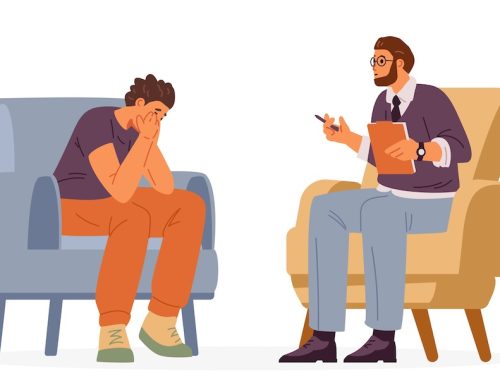
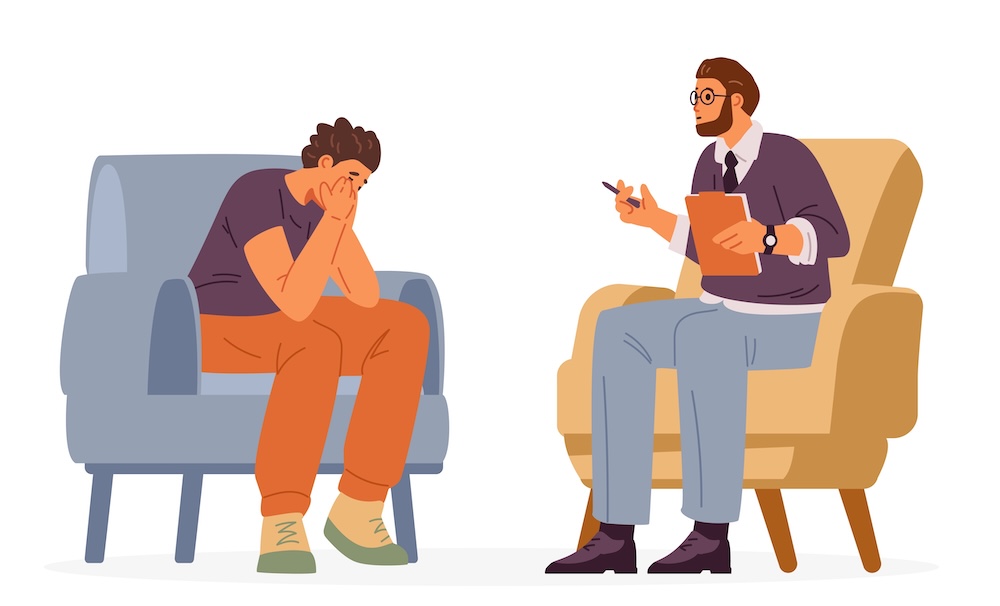
Therapy can help!
Therapy can be especially healing for this type of trauma, but it’s important to find the right therapist. Betrayal and harm happen within a relationship, and healing happens within relationships. It’s important to find a therapist with whom you can develop a feeling of security to explore, challenge, and understand your experience. Betrayal trauma often benefits from a long-term therapeutic style, rather than a short-term intervention. Relational therapy can be especially helpful in healing, understanding, and exploring what is happening within your relationships. Therapy can serve as a practice room, to explore the relationship, challenge what it means to be in a relationship with another, and understand how the way you show up in the therapeutic relationship might show up in life.
Healing from betrayal trauma is a little like that moment at the start of Mafia, when someone says “Open your eyes.” Except this time, you get to open them slowly, at your own pace, with someone sitting beside you. You start to see what was there all along… and learn to trust what you see!





Leave A Comment